

Foundation Paper Piecing (FPP) is a quilting piecing technique that allows you to create intricate designs with precision. By sewing fabric pieces directly onto a paper foundation or paper template, you can achieve sharp points and perfect angles with ease. Using tools like a rotary cutter, quarter ruler, and seam roller, you’ll trim excess fabric and press seams efficiently. In this guide, we’ll cover everything from beginner-friendly tutorials to courses and membership specializing in foundation paper piecing. Get ready to master foundation paper piecing and take your quilting skills to the next level!
Table of Contents
- About the Badge
- Introduction to Foundation Paper Piecing + Video Tutorial
- FPP Pattern Shops
- FPP Courses
- FPP Memberships
- Cotton Fabric Scraps Recycling Bag
- More Video Tutorials
- Freezer Paper Method
About the Badge
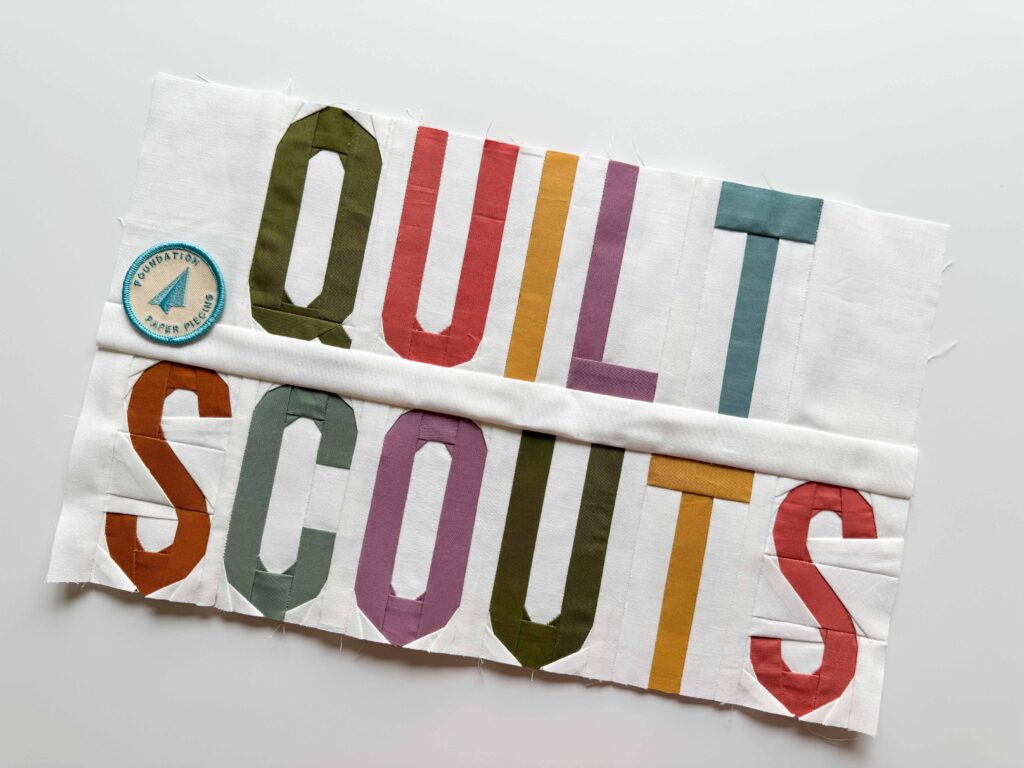
The Foundation Paper Piecing Badge is designed to introduce the technique of foundation paper piecing, a popular method in quilting that allows for precise and intricate designs. This badge helps quilters of all skill levels enhance their abilities and create beautiful, complex patterns with ease. By earning this badge, you will develop the skills needed to tackle detailed quilting projects and add a new dimension to your quilting repertoire.
Badge Requirements
- Learn the basics of foundation paper piecing. Understand the concept and purpose of foundation paper piecing and familiarize yourself with the tools and materials needed.
- Create a simple foundation paper piecing block using a beginner foundation paper piecing pattern. Follow the pattern to create at least one block, ensuring that pieces are sewn in the correct order and seams are precise.
- Complete a more complex pattern that includes multiple sections (for example, multiple letters an alphabet pattern). Assemble at least one block using this pattern.
- BONUS: Show off your completed foundation paper piecing projects on social media!
Amazon Storefront
Foundation Paper Piecing Must-Haves – Shop My Amazon Picks!
Introduction to Foundation Paper Piecing
Foundation Paper Piecing (FPP) is a quilting technique that is popular for its precision and versatility. It is a go-to method for creating intricate quilt designs. This post will provide a step-by-step overview of FPP, along with the pros and cons of using this technique in your quilting projects. I also included a video tutorial using the Mini Pennant Block pattern designed exclusively for Quilt Scouts!
This post may contain affiliate links, which means that I may earn a commission if you make a purchase using these links. As an Amazon Associate, I earn from qualifying purchases.
Must-Have Tools
- Printer Paper
- Paper Scissors
- Fabric Scissors or Rotary Cutter
- Acrylic Ruler
- Iron
- Ironing Board or Pressing Mat
- Fabric
- Thread
“Nice-to-Have” Tools
Pros of Foundation Paper Piecing
- Precision: One of the biggest advantages of FPP is the precision it offers. The paper foundation stabilizes the fabric, preventing stretching and distortion, which results in perfectly accurate piecing.
- Complex Designs Made Easy: FPP allows you to tackle complex patterns with ease. Intricate designs that would be challenging with traditional piecing methods become totally doable with FPP.
- Sharp Points and Clean Lines: Achieving sharp points and clean lines can be difficult in quilting, but FPP ensures crisp results every time. This is especially useful for designs with tiny pieces and detailed patterns.
- Versatility: FPP can be used for a wide range of quilt designs, from traditional blocks to modern and abstract patterns. The technique is adaptable to a variety of styles and preferences.
- Scrap-Friendly: FPP is a great way to use up fabric scraps. The small pieces required for many FPP patterns make it easy to incorporate leftover scraps from other projects.
Cons of Foundation Paper Piecing
- Time-Consuming: FPP can be more time-consuming than traditional piecing methods. The process of sewing and trimming each piece individually requires some patience and definitely more attention to detail.
- Paper Removal: Removing the foundation paper after sewing can be tedious, especially for larger projects. You can to be careful not to pull out stitches while removing the paper. TIP: To avoid having to remove bits of paper, try the freezer paper method.
- Fabric Waste: Because fabric pieces need to be cut larger than the sections on the paper, there can be more fabric waste compared to traditional piecing. As you become more comfortable with FPP, it becomes easier to work with smaller pieces, which can help minimize waste.
- Learning Curve: FPP can have a steeper learning curve. Understanding the technique and nailing down the steps takes practice, but the results are worth it!
- Limited Use of Recycled Paper: While foundation paper can be recycled after removal, it still generates waste. Some quilters use specialty paper that is easier to remove and more eco-friendly, but this can add to the cost.
Introduction to Foundation Paper Piecing
Foundation Paper Piecing involves sewing fabric pieces onto a paper foundation, following a printed pattern or template. The process ensures precise piecing and sharp points, making it perfect for complex and intricate designs. Here’s a step-by-step look at how FPP works:
- Print or Draw the Pattern: The foundation paper is printed or drawn with the desired quilt block pattern. Each section of the pattern is numbered to indicate the sewing order.





+ show Comments
- Hide Comments
add a comment